Case No: No. 26-EX127
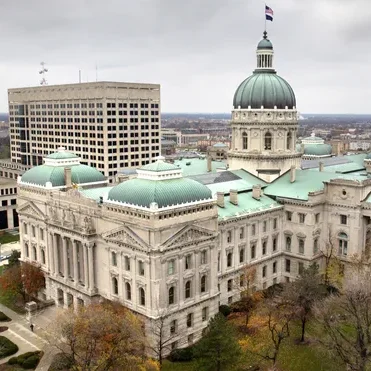
Forum: Indiana Supreme Court
Client:
Clean Grid Alliance, Earth Charter Indiana, Environmental Law & Policy Center, Gary Advocates for Responsible Development, Hoosier Environmental Council, Indiana Audubon Society, Indiana Conservation Voters, Just Transition Northwest Indiana, Save the Dunes Conservation Fund, Sierra Club-Hoosier Chapter, Solar United Neighbors, and Surfrider Foundation (collectively “Amici”). Together, these twelve organizations represent thousands of Hoosiers and businesses who participate in environmental and energy decision-making across Indiana.
CLC Attorneys:
Kim Ferraro, Noah Hines
Background:
The Conservation Law Center (“CLC”) filed an amicus curiae brief in the Indiana Supreme Court on behalf of twelve environmental, conservation, community, and clean energy organizations urging the Court to reaffirm Indiana’s longstanding recognition of associational standing—a legal doctrine that allows nonprofit organizations to represent their members in court under appropriate circumstances.
The case, Citizens Action Coalition of Indiana and Vote Solar v. Duke Energy Indiana, LLC and Indiana Utility Regulatory Commission, presents an important question: whether Indiana should continue following the framework for associational standing established by the United States Supreme Court in Hunt v. Washington State Apple Advertising Commission and recognized by four unanimous panels of the Indiana Court of Appeals over the past two decades.
The brief authored by CLC attorneys makes two key points.
- First, it explains that Indiana’s Court of Appeals did not “uncritically” adopt associational standing as opponents of the doctrine contend. Beginning with Save the Valley in 2005 and continuing through the present case, four separate panels of the appeals court examined the doctrine alongside Indiana’s constitutional standing requirements and consistently concluded that the Hunt framework is compatible with Indiana law. The brief also explains that the United States Supreme Court has repeatedly recognized that the Hunt test itself is squarely grounded in Article III’s constitutional “case-or-controversy” requirement.
- Second, the brief responds to opponents’ arguments that organizations could simply finance lawsuits brought by individual members or proceed through class actions instead. Drawing on the coalition’s collective experience, the brief explains that environmental and clean energy organizations represent their members long before litigation begins by monitoring agency proceedings, reviewing technical studies, coordinating scientific and legal expertise, participating in administrative hearings, and developing the record necessary for judicial review. Litigation is often the culmination—not the beginning—of that representative work. Associational standing preserves that continuity of representation whereas funding member lawsuits and class actions do not.
Environmental and energy laws frequently depend on public participation. Citizens and community organizations participate in agency permitting proceedings, submit technical comments, challenge unlawful government actions, and, when necessary, seek judicial review. For decades, associational standing has enabled organizations to represent their members throughout that process. Rather than requiring every affected individual to become a named plaintiff, the doctrine allows organizations to continue representing the collective interests they have already been advancing during administrative proceedings.
The amicus brief argues that this representative relationship is not merely a matter of litigation convenience. It is a constitutionally recognized feature of our legal system that ensures courts hear disputes brought by parties with genuine interests while allowing citizens to pool their resources, expertise, and experience through membership organizations.
Why It Matters:
Environmental and community organizations play a critical role in protecting Indiana’s people and natural resources. A favorable ruling would help preserve their ability to enforce environmental laws, defend public trust resources, and represent members affected by pollution, resource degradation, and agency decision-making.
Case Spotlight Handout: Defending Associational Standing in Indiana
Court Documents
Oral argument in Case No. 26S-EX-00127 is scheduled for Thursday, September 17, 2026, at 10:00 AM EDT.