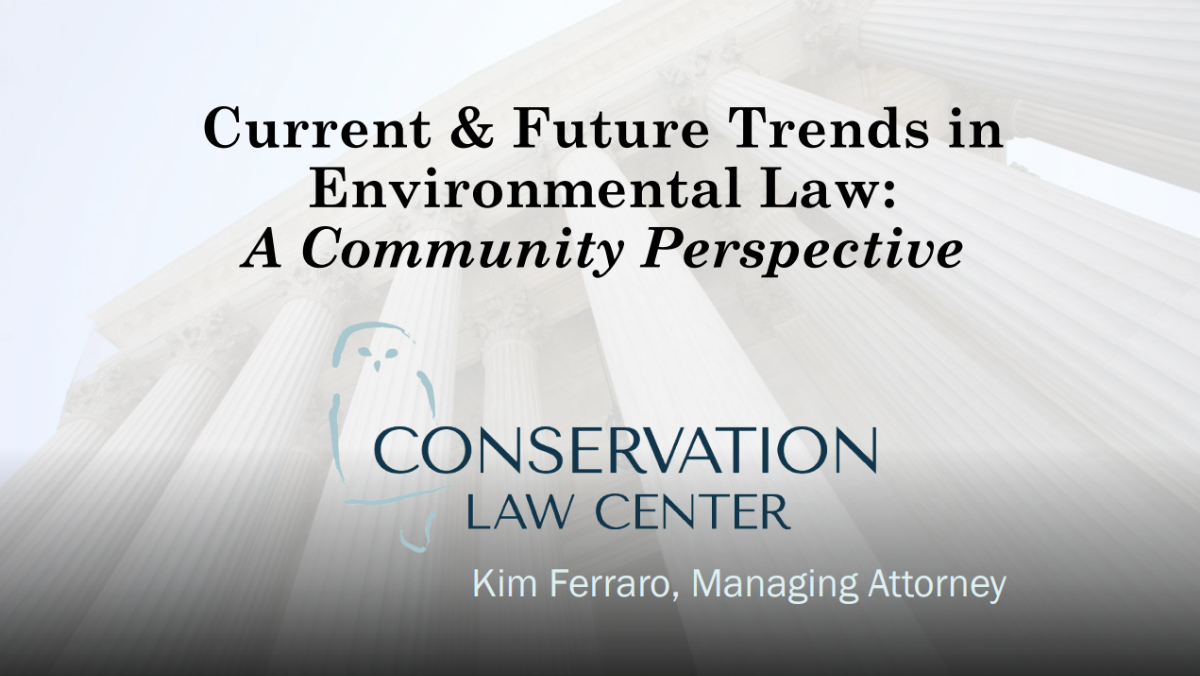
Environmental law in the United States has long depended on a cooperative federalism model, with federal laws setting a baseline of protection and states playing a major role in implementation and enforcement. Ferraro’s presentation explored how that framework is being tested by recent legal developments, including limits on agency discretion, changes in judicial deference to agency expertise, and potential barriers to citizen enforcement.
These trends are not abstract. They affect whether communities can meaningfully participate in environmental decision-making, whether agencies are held accountable for carrying out their responsibilities, and whether residents have access to legal tools when public health, natural resources, and shared landscapes are at risk.
Ferraro’s presentation emphasized the importance of understanding environmental law not only as a system of statutes and regulations, but also as a set of tools that communities rely on to protect the places where they live, work, and recreate.
The full presentation is available here: https://cdn.ymaws.com/www.inbar.org/resource/resmgr/env_law/current_&_future_trends.pdf