
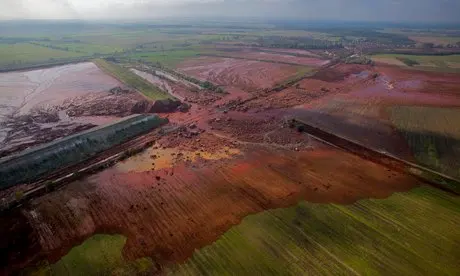
Aluminum is often thought of as a responsible and environmentally conscious solution to plastic water bottles. But if aluminum cans are not recycled, more aluminum ore has to be mined and refined. For every ton of aluminium produces, at least two tons of solid waste is produced. Alumina is used in the manufacturing of aluminium as well as cement and other industrial products. Bauxite refineries produce alumina as well as other byproducts. Red mud is used to create alumina, but after the alumina is removed, there is no use for it. Red Mud can contain radioactive elements, as well as arsenic. This combined with its high pH and salinity makes it extremely dangerous to the environment. It is held in artificial reservoirs. In 2010 a dam collapsed in Hungary, covering a small town in deadly mud. Tragically 150 people were injured, and 10 died.

My hometown of Bloomington, IN, was home to a transformer factory operated by Westinghouse. A type of chemical called PCBs (polychlorinated byfedials) were used in their production. PCBs are non-flammable insulators that are extremely useful when operating a transformer, but chronic exposure to them can cause an increased risk of liver ailments and cancers. They are no longer used in the US, but the chemicals leached into the sewer system and polluted the treatment plant and the creek that the plant led to. A special waste dump had to be constructed, and the clay in the creek is still too toxic for fish caught in the creek to be consumed.
These are just two examples of how refining and manufacturing have damaged our environment. There is no shortage of examples of similar stories. While recycling is an attractive alternative to alumina refining, it is not without its downsides either.
Sources
https://bloomington.in.gov/sites/default/files/2017-05/toxics_report.pdf
https://www.epa.gov/radiation/tenorm-bauxite-and-alumina-production-wastes
https://www.epa.gov/sites/production/files/2016-09/documents/polychlorinated-biphenyls.pdf
https://www.theguardian.com/environment/2014/jan/08/devecser-hungary-eco-town
Images
https://media.apnarm.net.au/media/images/2013/11/20/OGO_21-11-2013_ROP_01_GLA040712VIEW385_t1880.jpg
By Sam Fischman