As long as Terry Steagall can remember, the environment in his hometown of Hammond, Indiana, and the surrounding area has been poor. So Steagall, who recently retired after 41 years at a local steel mill, joined his union’s environmental committee and strove to be a good steward of the land.
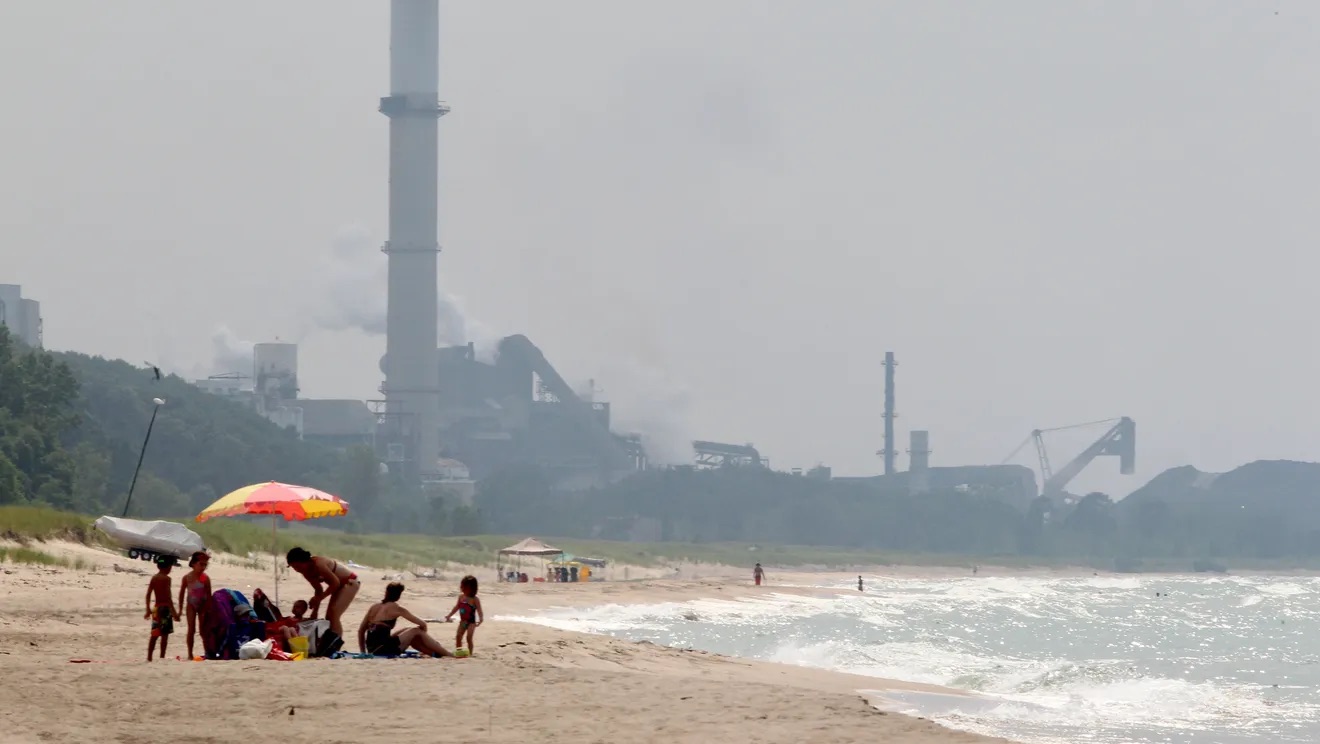
The committee had multiple problems to address. The Little Calumet, just blocks from where Steagall used to live, had shores like quicksand from all the toxic sludge and the Grand Calumet River was one of the most polluted bodies of water emptying into Lake Michigan. Northwest Indiana, including Hammond, has the densest concentration of coal-burning steel mills in the U.S. amid some of the worst quality air in the state.
“If you don’t take care of the environmental stuff, you’re eventually not going to have a job,” said Steagall, who kept the mill running in the Indiana Harbor Works steel mill before retiring in 2023. “And if you don’t pressure the company to maintain things, they work it to death until it’s beyond fixing and they just shut operations down.”
Now Steagall fears the Trump administration will eventually destroy some of the progress he and other advocates have made in Indiana when it comes to encouraging steel companies to transition away from the coal-burning, pollution-spewing ovens they currently use.
Trump EPA delays pollution standards
The U.S. Environmental Protection Agency issued two interim rules in July extending old air pollution standards for steel mills. The new rules delay the 2024 Biden administration rules that aimed to curb cancer-causing pollution from reaching neighborhoods near mills.
This delay has sparked lawsuits from environmental and public health groups concerned about worsening air quality and the effect on public health.
The two rules at the center of the steel mill controversy are called interim final rules — which means the EPA can skip the public notice and comment period normally required during the federal rulemaking process. The EPA said it fast-tracked the process to take the short-term financial burden the original rules would have created off steel companies.
Interim final rules such as these are typically only issued to address a natural disaster or public health emergency. Final rules go through a robust public comment period before taking effect.
The interim rules EPA issued go into effect immediately. Rather than complying with stricter standards this year, companies now have until 2027 to clean up their processes.
The delay may seem short, but the impacts will be long-term, said Annie Fox, a law clerk with the Clean Air Council, one of the many environmental groups and community organizations suing the EPA.
“Delaying compliance by 18 months to two years is a long time of additional exposure for a child, especially during certain developmental points when that harm can be the worst,” Fox said.
The EPA, led by President Donald Trump appointee Lee Zeldin, said it had serious concerns the steel industry would not be able to comply with the 2024 rules due to the short timeline and expense.
An EPA analysis done under the previous administration, however, said complying with the stricter rules would cost a company less than 0.2% of its annual sales. That equates to the cost of an average middle-class family buying a single cup of coffee each month, Fox said.
Amanda Malkowski, spokeswoman for U.S. Steel, which operates the Gary Works steel mill, said the company supports regulations grounded in law, based on sound science and that consider costs.
“Unfortunately, the rule proposed in 2024 does not meet these criteria,” Malkowski wrote in an email to IndyStar. “In addition, implementation of the 2024 rule would have provided little, if any, environmental benefit while significantly impacting American jobs and the nation’s critical infrastructure.”
Hoosiers fight for health protections
Northwest Indiana residents have long suffered health effects from the steel mill operations, advocates say, arguing that efforts to curb that pollution should not be delayed.
Founded by the U.S. Steel Corporation in the early 1900s, the Gary Works steel mill employed about 30,000 workers at its peak in the ‘70s. Today, that number has dwindled to fewer than 4,000 in the remaining three steel mills.
Carolyn McCrady, board member of Gary GARD, says residents bear the brunt of the pollution. GARD, which stands for Gary Advocates for Responsible Development, is a community-based organization promoting responsible development in the city.
“Gary Works has been the lifeblood of this community ever since it was established in 1906,” McCrady said. “It’s provided jobs that created our middle class, but at the same time many people have had a lot of health problems, and that basically went with the territory.”
The life expectancy for Gary residents is about 10 years lower than that of residents in the wealthier community of Carmel, a statistic McCrady attributes to the pollution from the surrounding coal-burning mills.
McCrady’s on-the-ground observations of poor public health are backed up by a recent study published by Industrious Labs. Every year, hundreds of premature deaths in the U.S. are linked to airborne pollution from coal-based steel and coke plants, according to the report published in October 2024.
“While some frontline communities have historically benefited from the economic stability provided by iron and steel production, the industry has simultaneously inflicted harms to health and wellbeing that persist for generations,” the report says.
Groups study air pollution effects
Jen Duggan, executive director of the Environmental Integrity Project, said there is no excuse for delaying the requirements.
“Any delay in requiring these common-sense rules that require monitoring and action to reduce pollution is only putting the health of workers at greater risk,” Duggan said.
Duggan and EIP recently published a study on how steel industry regulations and pollution affect public health. The study, released in August, shows steel mills released more than two million pounds of hazardous air pollution in 2023.
Two of the most common pollutants released are benzene and chromium.
Benzene can cause cancer, especially leukemia, when people are exposed to it for long periods of time, according to the EPA. It can also cause various blood disorders and negatively affect women’s reproductive systems. Chromium is also a known carcinogen, and long-term exposure can cause perforations and ulcers in the respiratory system.
The monitoring required by the now-delayed EPA rules would have given companies a good idea of how much of these toxic pollutants reached nearby Hoosiers. Such so-called fenceline monitoring essentially consists of a ring of sensors around the facility and is a critical part of keeping communities safe, Duggan said.
“This is not novel technology, it is not brand new,” Duggan said. “Refineries have been using this for more than a decade and have significantly reduced concentrations of benzene.”
Dr. Allan Halline, a retired physician living in Northwest Indiana, has been working with Gary GARD as a community ambassador to recruit participants for a public health study looking at pollutants in and around people’s homes.
The study, which will wrap up next year at the earliest, aims to help researchers find relationships between pollutants and health.
“As a physician I have been well aware of the health consequences of pollution forever,” Halline said. “It extends into every organ system in the body, but it is hard to link specific (pollutants) to specific industries to specific health effects.”
The steel mills are large contributors to the area’s pollution, Halline said, but Hoosiers who live in the area are also surrounded by trucking traffic on the nearby interstates. The area is a point of congestion for heavy travel, he said, which also contributes many pollutants.
As Gary residents and their neighbors in Northwest Indiana look for solutions, the groups suing EPA hope the courts will side with public health.
Fox, one of the attorneys working with the groups, said the timeline for action is tough to predict.
“All I can say is we hope the court will act swiftly to vacate the (interim final rules) and protect people, particularly children, from the ongoing harm from unnecessary harmful air pollution from the steel facilities,” Fox said.
IndyStar’s environmental reporting project is made possible through the generous support of the nonprofit Nina Mason Pulliam Charitable Trust.
Karl Schneider is an IndyStar environment reporter. You can reach him at karl.schneider@indystar.com. Follow him on BlueSky @karlstartswithk.bsky.social or X @karlstartswithk.