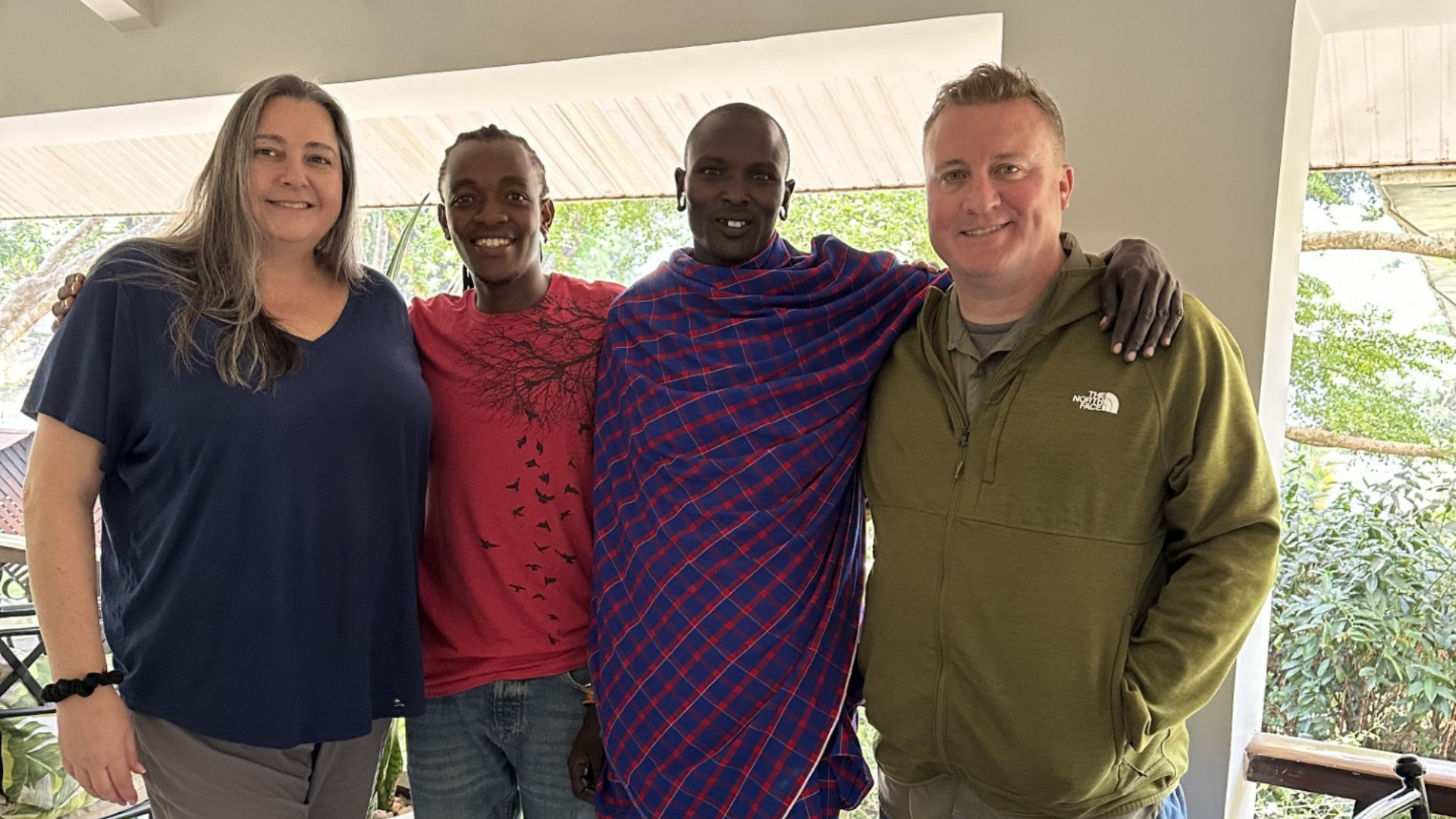
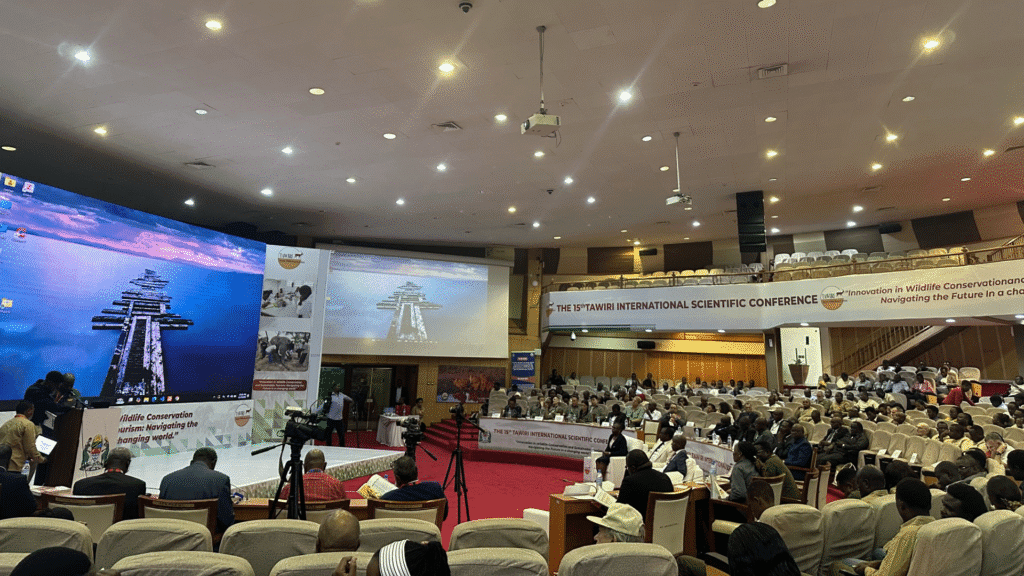
This past December, Conservation Law Center Executive Director Christian Freitag traveled to Tanzania to attend the 15th TAWIRI International Scientific Conference, a biannual gathering of wildlife scientists, conservation organizations, and government agencies working across East Africa. The conference, hosted by the Tanzania Wildlife Research Institute (TAWIRI), brought together researchers and practitioners focused on understanding and addressing some of the most complex challenges in conservation, including human–wildlife conflict.
Human–wildlife conflict occurs when people and wildlife compete directly for space and resources. In Tanzania, this can mean elephants trampling crops relied upon by subsistence farmers, predators killing livestock, or crocodiles threatening villagers who depend on rivers and lakes for water. These encounters can have devastating impacts on families while also increasing risks to protected species.
TAWIRI plays a central role in coordinating national research on these issues and advising the Tanzanian government on wildlife management policy. Over the past year, CLC has been working with TAWIRI and academic partners to examine how legal frameworks shape responses to human–wildlife conflict and whether current approaches are achieving their intended outcomes.
Attending the conference was not just about learning from presentations. It was about building relationships.
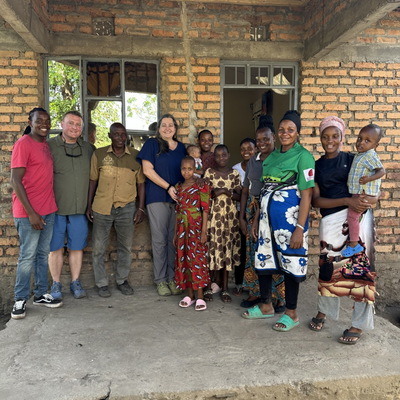
“We know that conservation moves at the speed of trust, and research only goes so far if you don’t have strong partnerships with the people who are actually doing the work on the ground,” Freitag said. “This conference gave us a chance to strengthen our relationships with TAWIRI scientists, meet new NGO partners, and connect with researchers who have long-standing relationships with local communities.”
These connections are essential for the next phase of CLC’s work, which will evaluate whether existing conflict mitigation programs are effective from the perspectives of wildlife conservation, community safety, and government policy goals. In parallel with this relationship-building work, Conservation Law Clinic students are continuing legal research focused on how different East African countries regulate wildlife conflict and compensation/consolation programs. By comparing legal frameworks across Tanzania, Kenya, Uganda, and Rwanda, CLC aims to identify policy tools that could inform future wildlife management strategies.
For CLC, this project reflects a broader belief that conservation law must be grounded in social reality. “Protecting wildlife and supporting communities are not competing goals,” Freitag said. “They’re deeply connected. Law and policy must work for both.”
With support from the Brabson Family Foundation, CLC looks forward to continuing this collaboration with TAWIRI and partners across the region who are working toward solutions that support both thriving ecosystems and resilient communities.