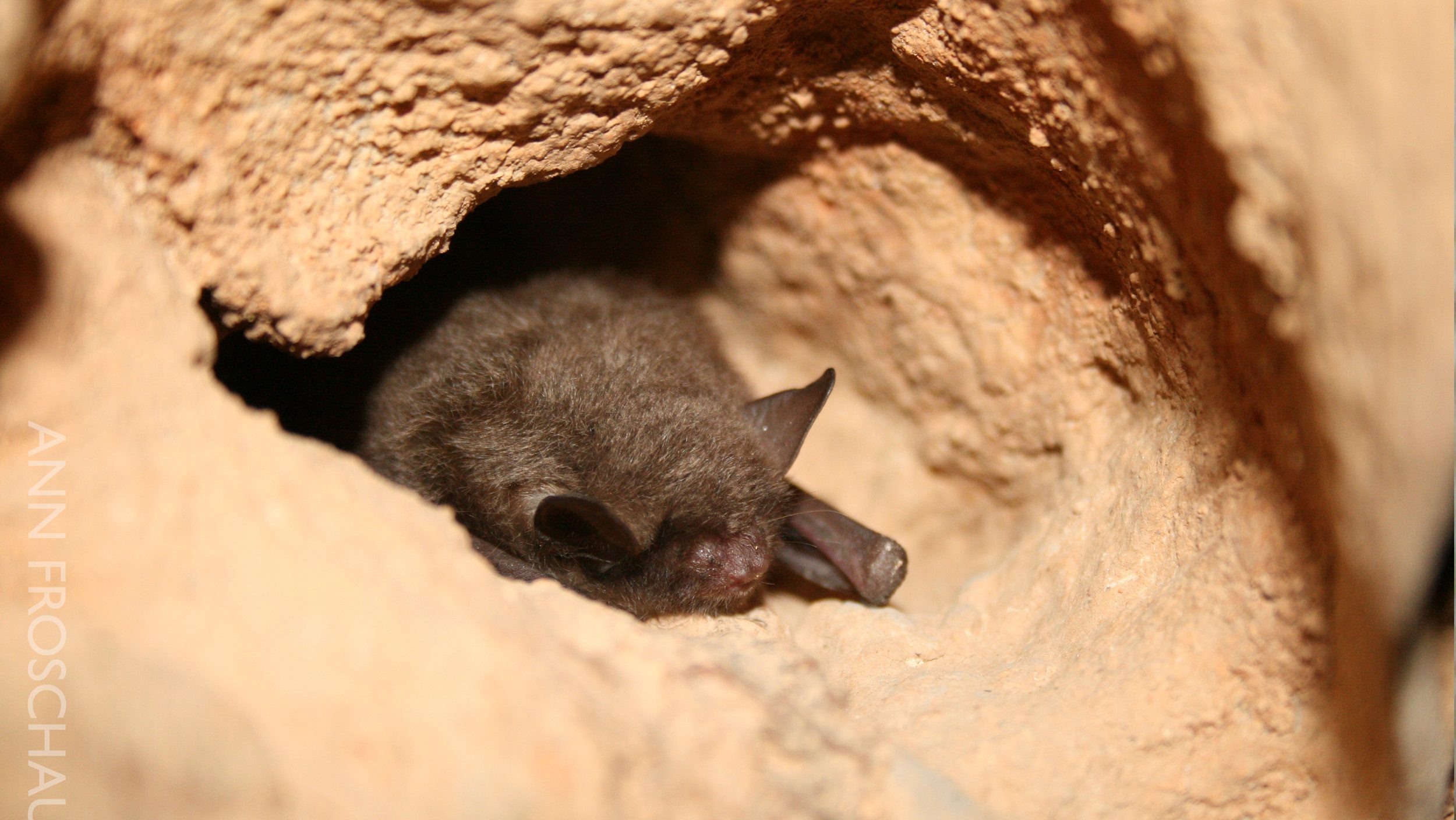
On March 8, 2016 at the United States Circuit Court of Appeals for the D.C. Circuit, CLC attorneys Bill Weeks, Jeff Hyman, and Peter Murrey argued client Union Neighbors United’s claim for better protections for the endangered Indiana Bat. In an important decision, the court has ruled for the bats, setting a precedent which will mean more careful consideration of the environmental impacts of all federal decisions.
The endangered Indiana Bat faces several threats to its continued existence, and in the case of Union Neighbors United, Inc. v. Sally Jewell, CLC argued that undue deaths caused by wind turbines should not be one of them. At the heart of the case was a permit issued by the Fish and Wildlife Service (FWS) to a wind energy company which allowed for the killing or “take” of some Indiana Bats by the company’s proposed wind turbine project. CLC successfully contended that the agency failed to adequately consider a reasonable range of alternatives to minimize the harm to the endangered mammals and other wildlife.
CLC’s argument was built on one of the foundational pieces of environmental legislation: the National Environmental Policy Act (NEPA). NEPA requires agencies to analyze a reasonable range of alternatives to major actions that will significantly affect the environment.
Scientific studies show that increasing the cut-in speed (not allowing wind turbine blades to turn until the wind is blowing briskly) will prevent many bat fatalities.
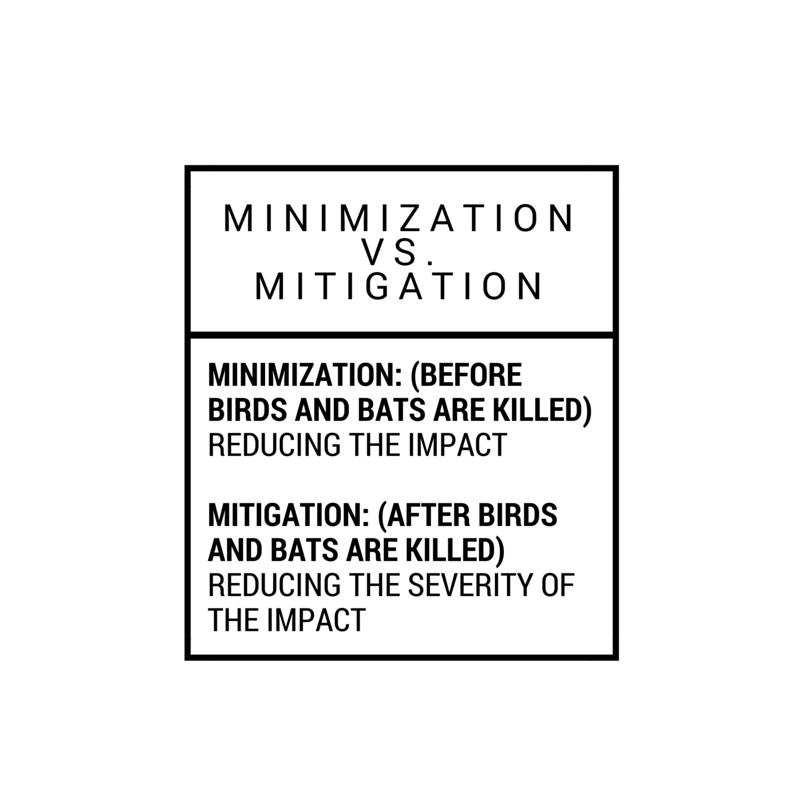
When the agency was preparing its environmental impact statement under NEPA, CLC urged FWS to analyze the effects of implementing a cut-in speed of 6.5 m/s, rather than the agency’s chosen maximum 6.0 m/s alternative. FWS declined, saying that it had already studied a reasonable range of alternatives by studying alternatives that were less and more protective than the 6.0 m/s plan. However, the more protective alternative it studied (called the shut-down alternative because it would shut down turbines nightly half the year to protect bats) was recognized by both the developer and FWS to be infeasible. The wind farm would not be built under the shut-down alternative.
CLC and Union Neighbors challenged the agency’s refusal to consider the higher cut-in speed proposal. The Circuit Court ruled in favor of CLC, stating that “[FWS] failed to comply with its NEPA obligations when it failed to consider an economically feasible alternative that would take fewer bats than Buckeye’s proposal.”
CLC also argued that the take permit issued by FWS violated the Endangered Species Act (ESA). The court deferred to the agency’s position that impacts of take, which must be minimized and mitigated to the maximum extent practicable under the ESA, do not expressly include individual mortality. However, in light of the additional analysis under NEPA required by the ruling, there may still be an issue as to whether FWS would be required to make an independent finding that the 6.5 m/s alternative was impracticable. The Court declined to rule in advance about that possibility.
Speaking on behalf of Union Neighbors United, Julie Johnson expressed gratitude for the work of CLC saying, “Agricultural communities depend on bats whose value has been estimated at $74 per crop acre in avoided pesticide use. This case represents a win for protected bats and a win for farmers everywhere.”
Related Press: