While conservationists dedicate their careers to restoring and managing habitats, conservation lawyers protect these ecosystems through legal structures to mitigate water contamination, air pollution, hazardous waste, wildlife destruction and more. Indiana University Maurer School of Law students in the Conservation Law Clinic are safeguarding Indiana’s natural landscapes through a legislative resolution and a new law.
Third-year law student Erin Shea, from Fort Wayne, Indiana, has a long-standing interest in the environment. During her first year of law school, she learned that most conservation requires government cooperation at the local and state levels. She joined the clinic to make a difference.
“I was drawn to the idea that students could contribute to projects that had real environmental and community impacts,” Shea said. “The Conservation Law Clinic is a great opportunity to get actual legal experience and connect the concepts I was learning in class to real situations.”

Third-year law student Erin Shea, right, said that working with the Conservation Law Clinic built confidence in her ability to meaningfully contribute as a young attorney.
Photo by Chris Meyer, Indiana University
Through the clinic, second- and third-year law students serve as interns at the Conservation Law Center, working with clients who need assistance with natural resource conservation. Maurer adjunct faculty member Robert McCrea has been one of the clinic’s supervising attorneys for the past four years.
“There are times when the clients’ wants aren’t the most feasible solution,” said Shea, who worked with McCrea as an intern and then in her final year as a student associate. “Rob and the other Conservation Law Center attorneys taught me how to approach these situations, emphasizing the role that attorneys play as partners with their clients. We must understand the impact these environmental challenges have on them and their communities and identify the best way to address it.”
McCrea specializes in land conservation; one of his focuses is the Southern Indiana Sentinel Landscape, a collaborative partnership between government agencies and private organizations to conserve 3.5 million acres in south-central Indiana. Students in the clinic work with a variety of clients to protect the area, which houses four military installations, six state parks, seven state forests, nine state fish and wildlife areas, 39 state-dedicated nature preserves, one national forest and three national wildlife refuges.
The area’s challenges include the conversion of traditional farms, forests and other natural lands to other uses, as well as unsustainable land practices that harm the environment. Some ecosystems are threatened by invasive species, extreme weather and poor water quality. Combined, these challenges jeopardize military missions that need to operate in natural environments.
Law students help landowners adopt sustainable practices and ensure land uses are compatible with military operations in the area, all while conserving Indiana’s natural heritage. Second-year law student Ryan Dibble, from Ridgecrest, California, worked with Shea and other clinic members to research and draft Senate Resolution 34, to increase awareness of the partnership and area conservation efforts amongst Indiana legislators.
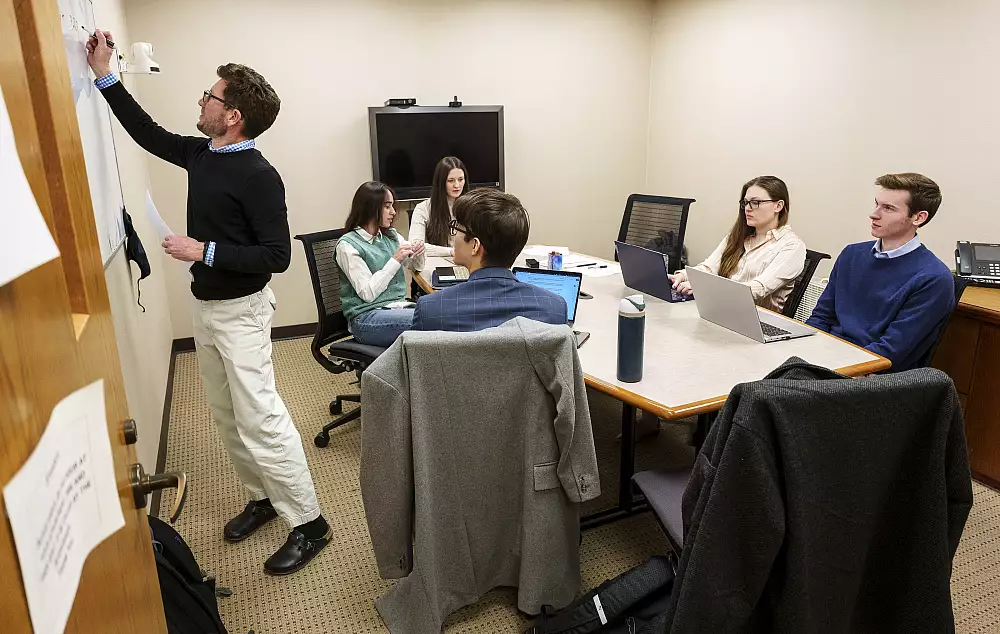
Robert McCrea, supervising attorney for the Conservation Law Clinic, mentored Maurer School students as they drafted resolutions and laws and worked with clients.
Photo by Chris Meyer, Indiana University
“Working on the concurrent resolution supporting the Southern Indiana Sentinel Landscape was rewarding,” Dibble said. “The Sentinel Landscape project showed me how the law can coordinate efforts between government agencies, local communities and conservation organizations. It reinforced the role lawyers play in structuring collaborative solutions to complex problems.”
This isn’t the first time clinic students have contributed to legal conservation efforts. In the fall of 2024, they researched and drafted a bill to expand the state’s prescribed burning capacity, which is when controlled fires are conducted to burn debris and reduce the risk of catastrophic wildfires. The bill passed in the legislature and was signed into law by Gov. Mike Braun in April 2025, a significant milestone considering Indiana was one of the few remaining states that did not have a law about prescribed burning.
Christian Freitag, executive director of the Conservation Law Center, said that Maurer students play an indispensable role in the organization’s mission.
“Seeing the bill get passed was such a rewarding experience because that will likely have an impact on Indiana landowners and conservation efforts for years to come,” Freitag said. “Because of Maurer, we’re able to work with an army of aspiring attorneys who are eager to help with cool conservation projects. Every semester they help research environmental law and policy, advise clients and support Hoosier landowners.”
Shea credits her experiences at Maurer and the clinic for helping her secure a job at a law firm in Indianapolis post-graduation.
“Professionally, I’ve developed so many skills that will be very valuable in my career,” Shea said. “The work we are doing has an impact, which is challenging but also makes it much more meaningful.”

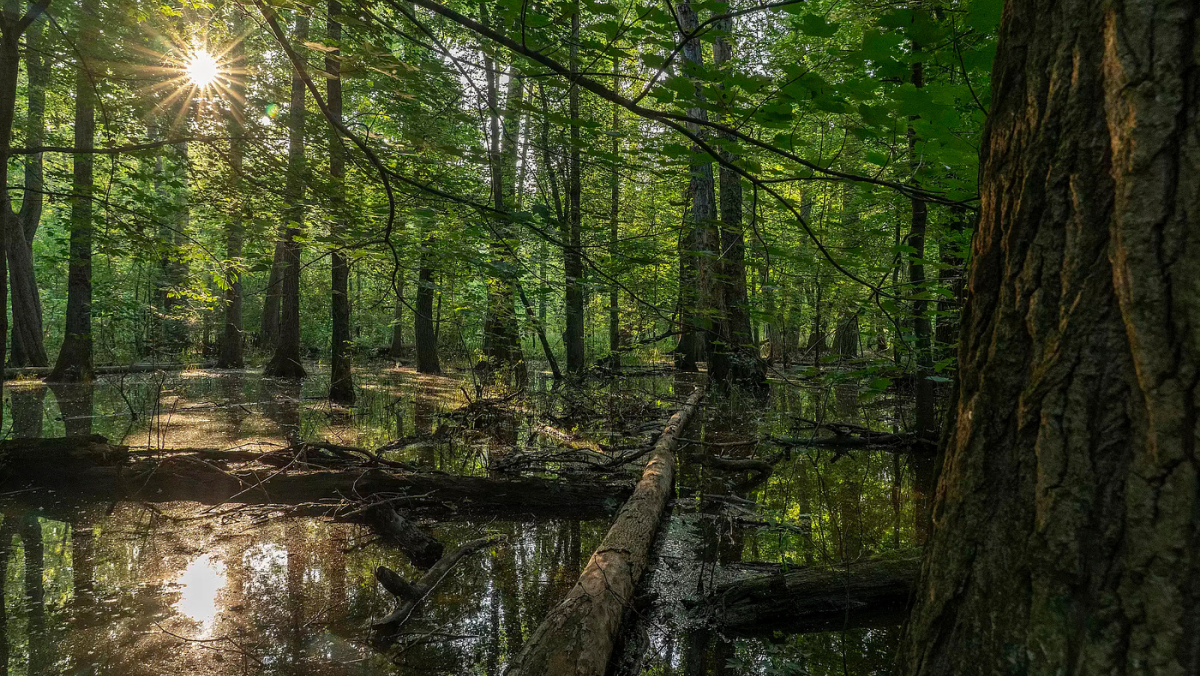
During the spring 2026 semester, IU Maurer School students traveled to Knox County, Indiana, to meet their client, the Wabash Busseron Alliance, and tour part of an 11,000-acre conservation area between the Wabash River and Busseron Creek. Photo courtesy of Robert McCrea