
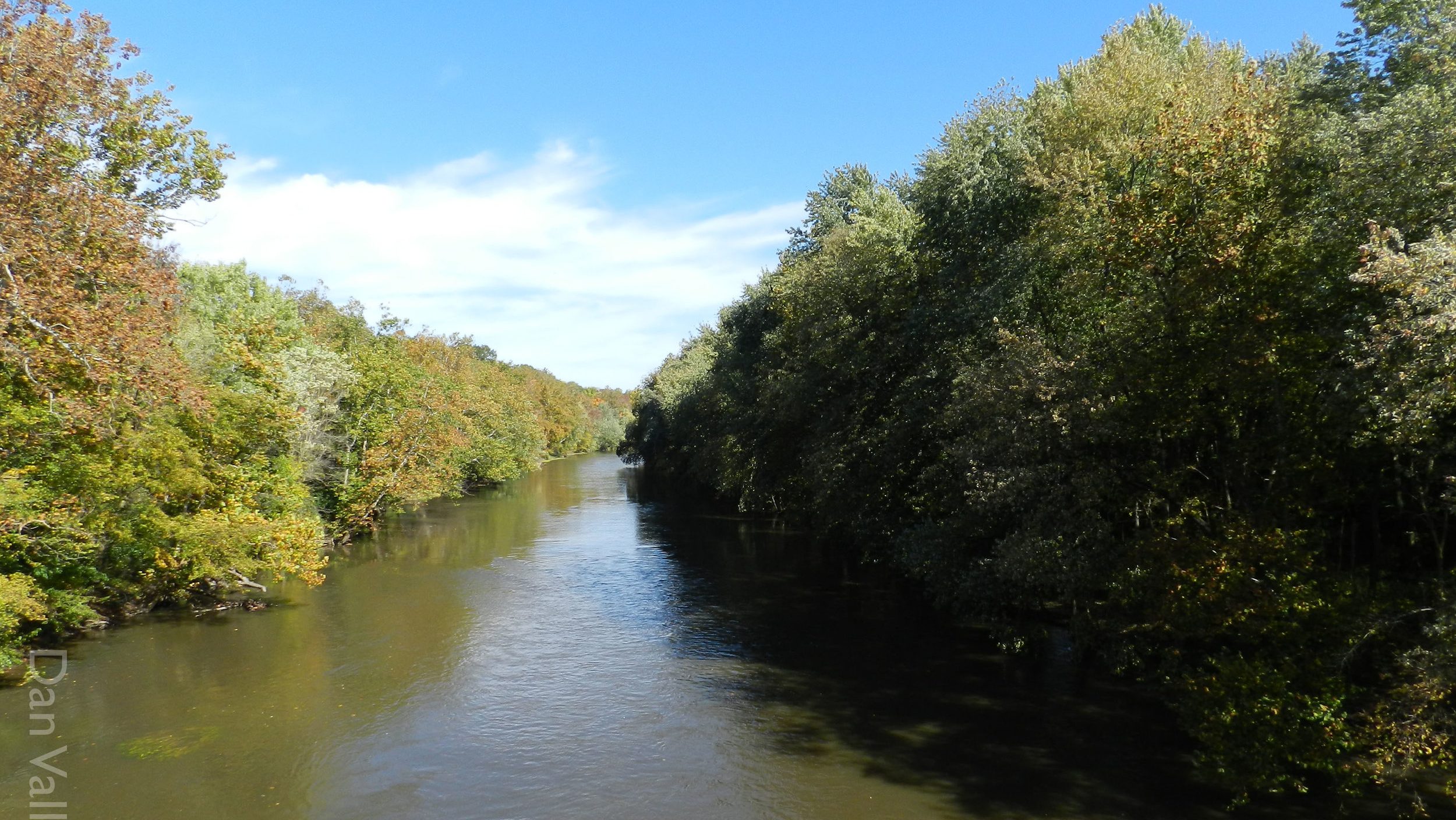
AES Indiana continues to pump toxic coal ash contaminants into the White River, according to environmental advocates pushing back against a recent state ruling they contend wrongfully allows the pollution to continue.
Toxic pollutants such as arsenic, lead, mercury and chromium are contaminating the groundwater at the Eagle Valley site in Martinsville then migrating offsite from containment ponds — a violation of federal coal ash rules, the Hoosier Environment Council says.
Coal ash is what remains after coal is burned for energy and exposure can lead to a variety of health issues.
Some of that tainted groundwater also is being pumped back to the plant for cooling before being released into White River.
Utilities must have a plan in place to address instances when coal ash contaminates groundwater and make sure the contamination does not spread, according to federal requirements. AES is violating this by ultimately pumping coal ash contaminants up from the groundwater and sending it into the White River, HEC argues.
Indra Frank, with HEC, said the group has been trying to work with the Indiana Department of Environmental Management since 2021 to get this issue fixed in AES’s discharge permit.
“It just does not make sense that pumping contaminated water into the river is a way to address contamination,” Frank said.
HEC is now asking the Morgan County Circuit Court to overturn an administrative law judge’s order they say allows the utility to violate federal rules at Eagle Valley.
AES Indiana spokeswoman Mallory Duncan, in an email to IndyStar, said the utility is committed to the safety of its people, the communities it serves and the environment around its facilities.
“While we do not comment on pending litigation, coal is no longer burned and ash is no longer sent to ponds at Eagle Valley Generating Station,” Duncan wrote. “Our facility meets all applicable environmental requirements set by state and federal regulations.”
Environmental group pushes back against judge’s order
A judge with the Indiana Office of Administrative Law Proceedings denied HEC’s efforts to have IDEM revise the pollution permit back in February, saying in part the group could not prove its members suffered injury due to the permit.
Kim Ferraro, an attorney with the Conservation Law Center at Indiana University, is representing HEC in the Morgan County court and said the judge’s order ignores decades of established law and has broader implications even outside this case. The ruling and resulting legal battle come at a time when Indiana and the federal government are rolling back and eliminating their own environmental protections.
“That is a real concern for the ability of nonprofit organizations to pursue legal challenges like this on behalf of their members,” Ferraro said. “Most individuals can’t afford to bring expensive litigation and challenge a permit or agency decision, which is precisely why they join organizations that represent their interests.”
HEC filed its challenge to the law judge’s ruling July 21 and is waiting for AES and IDEM to respond.
Ferraro said the administrative law judge did not engage with HEC’s original arguments against the permit in any meaningful way and felt the group did not receive fair and impartial review given that many of the judge’s arguments presented in the ruling were cut and pasted from IDEM’s own statements.
Water conservation district supports HEC
Just as HEC filed its suit with the court, the Morgan County Soil and Water Conservation District added its voice to the group’s efforts saying the judge’s order ignored evidence that the discharge permit is unlawful.
The district, which is responsible for promoting environmental stewardship in the county, said in a court filing that IDEM issuing the discharge permit sidesteps requirements under the federal Clean Water Act and coal ash rules.
“The Morgan County SWCD respectfully requests the court to reverse the OALP’s unlawful decision …” the district’s filing says.
The district, while not party to the suit, is concerned the IDEM-issued permit will allow coal ash contaminants to be discharged into the White River “every day, year-round for years to come.”
Eagle Valley’s coal ash impoundments
AES Indiana transitioned its Eagle Valley facility to a gas-burning plant in 2018 after it stopped its coal operations there in 2016. The utility had to renew its discharge permit with IDEM in 2023 and those efforts fell short in the eyes of HEC.
There are three coal ash ponds on site classified as having “significant hazard potential” due to the chance of “hypothetical failures” resulting in contaminants damaging the environment of the White River and nearby areas, according to a 2021 AES assessment.
AES uses wells to pull up coal ash contaminated groundwater used at the Eagle Valley plant for steam and cooling processes.
Frank described the process as removing the contamination before using it to cool the facility, then adding it back in before it’s sent to the White River. Those contaminants would then be in a higher concentration after the whole process due to some of the treated water evaporating before the coal ash contaminants are mixed back in, Frank said.
Ultimately, HEC wants AES to stop discharging coal ash contaminants into the White River and find a more appropriate way to dispose of them after they’ve been removed from the groundwater.
IndyStar’s environmental reporting project is made possible through the generous support of the nonprofit Nina Mason Pulliam Charitable Trust.
Karl Schneider is an IndyStar environment reporter. You can reach him at karl.schneider@indystar.com. Follow him on BlueSky @karlstartswithk.bsky.social or X @karlstartswithk.