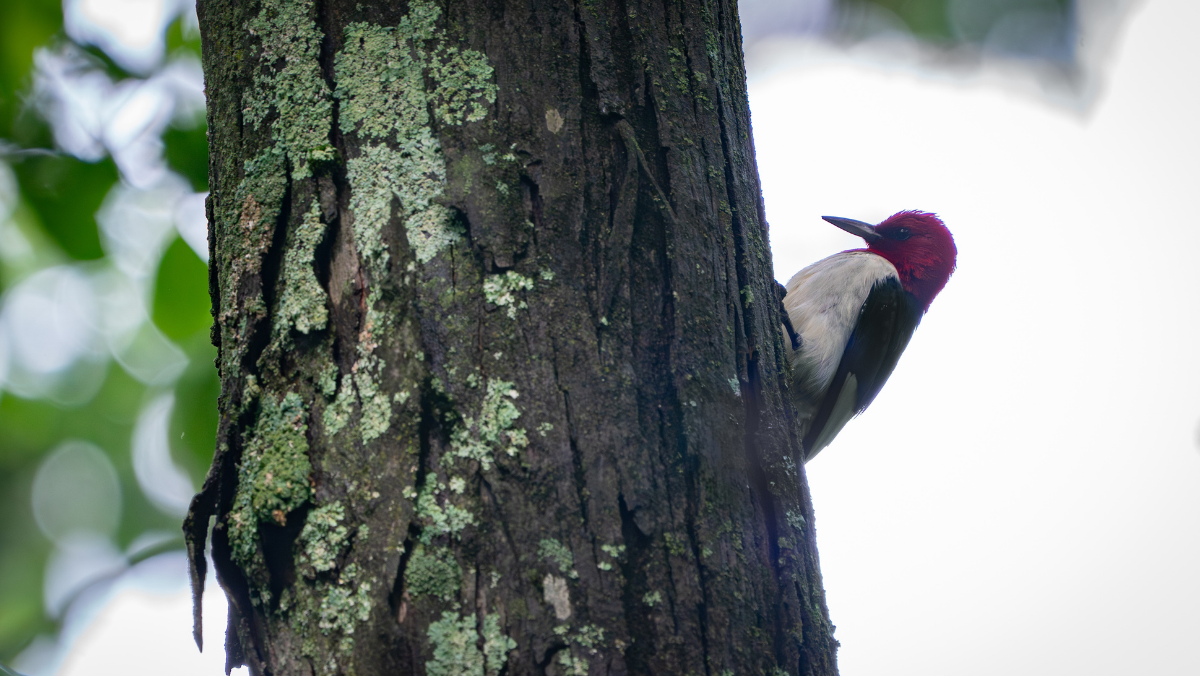
American Bird Conservancy (ABC) has been awarded a $9.5 million grant through the U.S. Department of Agriculture’s Regional Conservation Partnership Program (RCPP). The Central Hardwoods Working Forests for Birds project will help private landowners across southern Indiana and northern Kentucky care for their forests in ways that support wildlife, rural livelihoods, and the long-term health of the land.
Why these forests need attention
The hardwood forests of our region are changing. Over the past century, with fire exclusion, shade-tolerant and fire-intolerant trees like maple and beech have steadily shaded out the oak-hickory woodland communities that long defined much of Indiana. Natural resource professionals and scientists call this process mesophication. Not only do young oaks struggle to take hold, but the ecosystems lose the rich herbaceous plant diversity and structure that many birds and other wildlife need.
Most of this forest is privately owned, so its future rests largely with landowners. This project gives them practical support to act. Participants will receive conservation planning, technical guidance, and financial assistance to carry out science-based forest management on their own land, voluntarily and on their own terms.
How RCPP works
RCPP is run by USDA’s Natural Resources Conservation Service. It funds conservation on private working lands like farms, ranches, and forests. The program works through partnerships: a lead organization like ABC brings together partners who commit their own funding, staff time, or other resources, and USA invests alongside them. A proposal is only as strong as the partners behind it.
Where SISL comes in
The Southern Indiana Sentinel Landscape (SISL), coordinated by Conservation Law Center, played a major role in securing partner contributions from the region’s military installations. Sentinel landscapes are a federal partnership among the Departments of War, Agriculture, and the Interior. They recognize places where working lands, conservation, and national defense depend on one another.
For military installations, healthy and well-managed land nearby helps keep training missions possible over the long term. For landowners, it means support to keep their forests productive. For birds and other wildlife, it means habitat that stays connected across the landscape. The installations’ commitments helped make ABC’s proposal successful, and they show what becomes possible when defense, agriculture, and conservation interests work toward the same landscape goals.
Building partnerships that last
This is the kind of partnership Conservation Law Center works to build: practical, durable, and good for birds and the habitat they depend on. We’re grateful to ABC for leading this effort, to our military partners for investing in it, and to the landowners whose stewardship will carry it forward. Healthy working forests can sustain both rural communities and the wildlife that share the land. This project makes sure they do.